Night Shift Hustle: How 24/7 Community Members Are Turning Late-Night Passion Into Real Paychecks
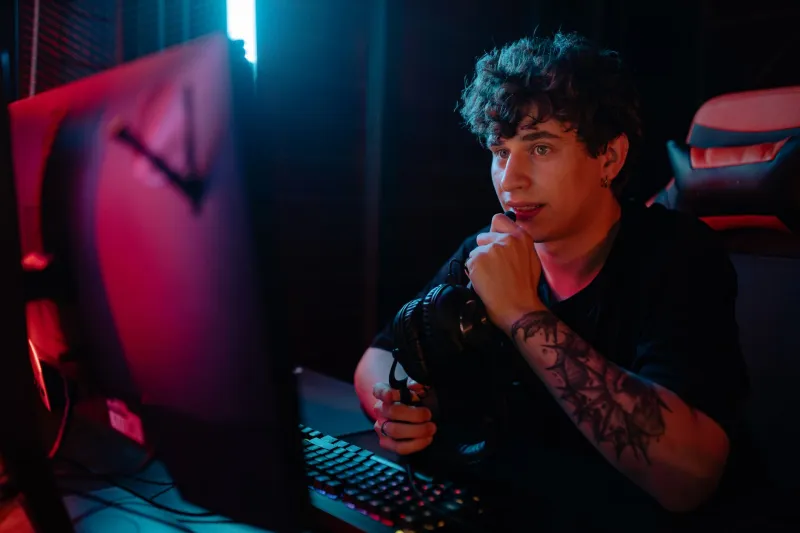
There's a moment somewhere between 2 and 4 AM when the internet shifts. The daytime crowd logs off, the algorithm exhales, and a whole different kind of energy takes over. For most people, that's just the weird part of the night before sleep finally wins. But for a growing number of online community members, those off-peak hours represent something else entirely: opportunity.
Welcome to what some creators are quietly calling the 4 AM economy — a loose but very real ecosystem of streamers, moderators, content curators, and community builders who are monetizing their late-night habits in ways that would've seemed far-fetched just five years ago. And the entertainment community space is right at the center of it.
Why the Off-Peak Hours Are Actually Prime Time
Here's something the traditional 9-to-5 content world hasn't fully figured out yet: when US-based creators go to sleep, a massive international audience wakes up. Members in Europe, Southeast Asia, and Australia are logging into the same communities, watching the same streams, and engaging with the same content — they just happen to be doing it during what Americans call the middle of the night.
Smart community members figured this out fast. A streamer based in Chicago who goes live at 3 AM isn't competing with the hundreds of thousands of creators broadcasting during peak evening hours. Instead, they're serving an underserved window. Less competition, more visibility, and an audience that's genuinely hungry for engagement.
Platforms like Twitch, YouTube Live, and newer community-based streaming tools reward consistency and viewer retention over raw numbers. A dedicated late-night stream with 200 loyal viewers can outperform a peak-hour broadcast with 800 distracted ones — and the monetization math reflects that.
The Community-to-Cash Pipeline
Streaming is just the most visible piece of this. Inside tight-knit entertainment communities, there are quieter but equally lucrative income streams developing organically.
Moderation and community management have become legitimate paid gigs. Larger Discord servers, fan communities, and membership platforms are actively hiring experienced moderators — people who already know the culture, the inside jokes, and the unwritten rules. Night-shift mods are especially valuable because that's historically when community management falls apart. If you've been the person holding down the server at 1 AM, you already have a résumé without knowing it.
Content curation and newsletter creation are another lane. Communities generate enormous amounts of content daily — clips, discussions, recommendations, drama recaps. Members who develop a reputation for knowing what's worth paying attention to often find themselves running paid newsletters, Patreon tiers, or even consulting for brands trying to reach niche audiences. The trust built inside a community is genuinely hard to replicate from the outside, and brands know it.
Affiliate marketing and product partnerships thrive in entertainment communities where recommendations carry real weight. When a trusted community voice says a particular streaming setup, gaming peripheral, or subscription service is worth it, people listen. Late-night communities — especially gaming and entertainment-focused ones — have become fertile ground for this kind of organic affiliate income.
The Rise of the Micro-Expert
One of the more interesting things happening inside 24/7 entertainment communities is the emergence of the micro-expert: someone who doesn't have millions of followers but has an almost encyclopedic knowledge of a specific niche. Think the person who knows every obscure horror film released between 1978 and 1995, or the community member who can break down competitive game meta shifts before the mainstream gaming press catches on.
These people are finding that their hyper-specific expertise has real market value. Platforms like Ko-fi, Buy Me a Coffee, and Patreon make it easy to monetize knowledge without needing a massive audience. A few hundred dedicated fans willing to pay $5 a month adds up quickly. And the late-night community environment — where conversations go deeper and audiences are more engaged — is exactly where those superfan relationships get built.
Some micro-experts have parlayed community credibility into freelance writing gigs, podcast appearances, consulting work, and even book deals. The community is often the launching pad, not the end destination.
Real Talk: It's Not Easy Money
Let's be honest about something: none of this is passive income in the traditional sense. Building a real revenue stream inside an online community takes time, consistency, and a genuine investment in the community itself. The people making actual money from this aren't gaming the system — they're showing up, night after night, providing real value, and building trust over months or years.
The monetization is almost always a byproduct of authentic participation rather than a calculated play. Communities are remarkably good at sniffing out people who show up purely to extract value, and they tend to reject those people fast. The members who thrive economically are almost always the ones who genuinely love the space they're in.
There's also the reality of burnout. Staying up until 4 AM to stream or moderate or create content is sustainable for some people and absolutely brutal for others. Night owls have a natural advantage here — not because they're tougher, but because they're working with their own biology rather than against it. If late-night hours feel like punishment, this particular hustle probably isn't the right fit.
What This Means for the Broader Entertainment Economy
The 4 AM economy is a signal of something bigger shifting in how entertainment and community intersect. The traditional gatekeepers — networks, labels, studios — have never had less control over who gets to build an audience and make money doing it. A 24/7 community platform doesn't care about your credentials or your zip code. It cares about whether you show up and whether people want to be around you.
For a generation that grew up watching the traditional job market get increasingly unreliable, the appeal of building income inside a community you already love isn't just financial — it's emotional. It feels like agency. It feels like ownership.
And honestly? Watching someone turn their genuine passion for entertainment into a real paycheck, even a modest one, is one of the more quietly exciting things happening in online culture right now.
The lights are always on here at Club24. The question is what you do with the hours most people sleep through.