Muted, Camera Off, Still Here: The Rise of the Parallel-Play Room
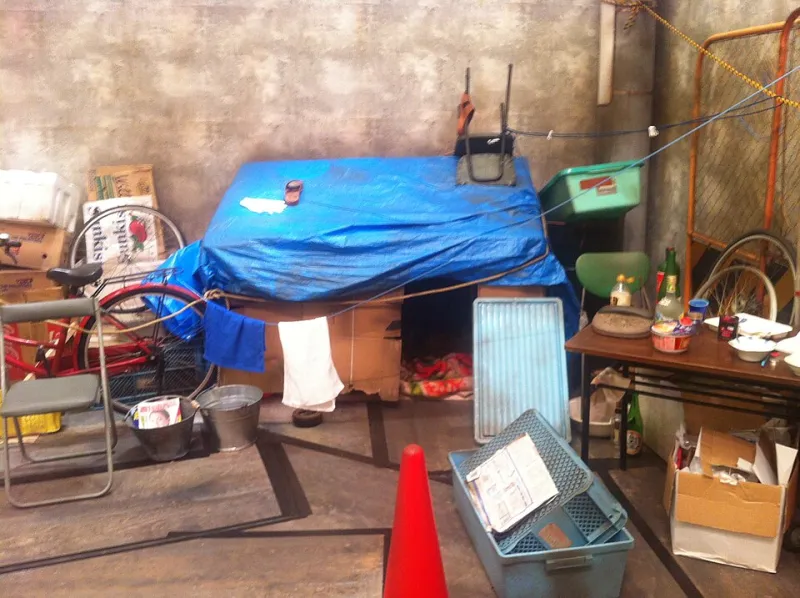
Photo: nesnad, CC BY 3.0, via Wikimedia Commons
Tuesday, 9:40 PM. A voice channel labeled "the long haul" has five people in it. Nobody is speaking. The only sound for the last twenty minutes has been a dryer thumping through a wall, the occasional clatter of a keyboard, and one person humming half a melody and stopping, embarrassed.
This is not a broken conversation. This is the point.
Across the country, a growing number of Americans are logging into voice channels specifically not to talk. They're there to fold laundry, sear chicken, grind through a spreadsheet, paint a hallway, or stare down the final 4,000 words of a thesis — and to do it in the loose company of other people doing the same. The trend has a name borrowed from childhood and from ADHD coaching: parallel play, or body doubling.
The room where nobody talks
The format is almost aggressively low-effort. There's a channel, there's a loose norm about how loud a vacuum cleaner is allowed to be, and there's a shared understanding that silence is not a problem to be solved.
Sessions run in clusters. The "coworking" block from 9 to 11 AM for remote workers. The "chore hour" right after dinner. The midnight shift, when the room fills with people whose actual jobs are over and whose second shift — dishes, invoices, a novel nobody has asked them to write — is just beginning.
Somebody mics up to say "starting my taxes, wish me luck," gets a thumbs-up in chat, and goes quiet for forty minutes. That's a whole conversation by the standards of the room.
What body doubling actually does
If you've ever cleaned your apartment because a friend was coming over, you've done it. The presence of another person doesn't make the task easier. It makes starting easier, and for most people starting is the whole war.
The psychology is unglamorous. A witness creates a soft commitment. You said you'd be here, someone can see that you're here, and so the twenty minutes you'd otherwise spend negotiating with yourself about whether to begin never happen. For people with attention difficulties, that nudge is the difference between a functioning week and a lost one. For everyone else, it's just pleasantly effective.
What's new in 2026 isn't the trick. It's the delivery. Body doubling used to require a friend in your living room. Now it requires a browser tab.
Etiquette is doing most of the work
Every one of these rooms has informal rules, and they're remarkably consistent from server to server.
- Announce, then go quiet. A two-second "starting dinner" is plenty. Nothing at all is also fine.
- Mute the heavy stuff. Blenders and leaf blowers get a warning or a mute. Dogs get a pass the first three times.
- Don't interview people. Long, probing questions break the spell. Weather, tasks, and encouragement are fair game.
- Leaving without a speech is allowed. A wave emote beats a five-minute explanation of why you have to go.
- Earphones are the social lubricant. Half-volume music bleeding through a mic is the fastest way to get politely ignored.
What's striking is how much of this is about protecting silence. A room that welcomes noise quickly becomes a room that demands it, and then it's just a call. The quiet ones are curating something more fragile.
Why it beats small talk
Compare an hour of muted co-presence to an hour of polite icebreaking with strangers, and the difference isn't subtle. Small talk asks you to be interesting on demand. Parallel play asks nothing except that you exist, on time, with your hands busy.
That's a lower bar than most friendships, and for a lot of people it clears the one that actually matters: showing up at all. The nurse who can't do a 6 PM happy hour can fold scrubs in a voice channel at midnight. The stay-at-home parent can chop vegetables with company that doesn't need a sitter. The night-shift security guard has somebody to say good morning to at 7 AM, which is their evening.
The members who use these rooms most describe the same thing in almost the same words: it makes the task feel shared without making it social. That distinction is the entire appeal. There's no performance, no joke to land, no memory of names required.
The limits worth naming
Parallel play doesn't replace conversation, and it isn't a fix for loneliness on its own. Sitting in a quiet room with five strangers is closer to a warm office than a friendship, and treating it as a substitute for actual human investment is a way to be accompanied and isolated at the same time.
There's also a low-grade risk in the ambient model: the moment a room's purpose gets fuzzy, it usually drifts toward becoming a call, and once it's a call, the people folding laundry leave. Communities that do this well guard the silence like it's the product — because it is.
How to try it without being weird
If you want in, the path is boringly simple. Find a server or a co-working channel with an active but quiet room and sit in it once without talking. Do a task you've been avoiding. Leave when you're done. Repeat until it stops feeling strange, which usually takes three sessions.
If you're the one running a room, give it a name that signals the deal — something closer to "laundry and emails" than "social hour" — post the hours, and then get out of the way.
The always-on internet has spent two decades inventing new ways to get us talking. The quietest thing it's ever built might be the friendlier one: a room where nobody needs you to be interesting, only present. Some people fold their towels alone. Some people fold them with four strangers on mute, and lately that's what passes for a Tuesday night worth looking forward to.