Who's Up? The Surprising Rise of Online Communities That Never Go Dark
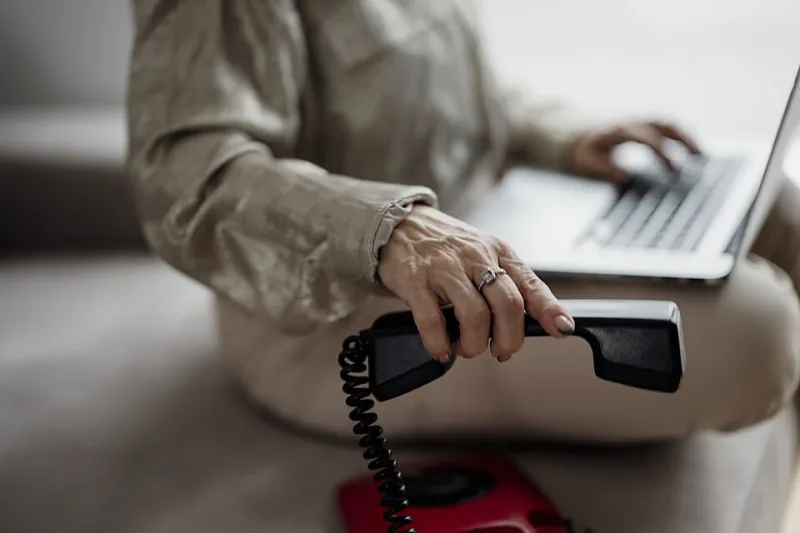
Photo: Shixart1985, CC BY 2.0, via Wikimedia Commons
It's 3:17 AM on a Tuesday. Most of America is asleep. The late-night talk shows wrapped hours ago, Netflix is cycling through its "Are you still watching?" prompts, and the algorithm has officially given up on you. But somewhere in a Discord server, a subreddit thread, or a niche forum dedicated to vintage horror films or underground hip-hop, the conversation is just getting started.
This isn't a fluke. It's a movement — and it's reshaping what entertainment actually looks like in the digital age.
The Hours Nobody Wanted
For decades, traditional media treated late-night audiences like an afterthought. Network TV wrapped up by midnight. Cable filled the dead hours with infomercials and reruns. Even the streaming giants, for all their on-demand bravado, are built around prime-time logic — content drops at predictable hours, algorithms optimize for peak evening traffic, and the assumption is that everyone is roughly on the same schedule.
But here's the thing: a huge slice of America isn't.
According to the American Academy of Sleep Medicine, roughly 70 million Americans deal with some form of chronic sleep disorder. Add to that the estimated 15% of the U.S. workforce on non-traditional shifts — nurses, truck drivers, warehouse workers, security guards — and you're looking at tens of millions of people who are wide awake when the rest of the country clocks out. For a long time, those people didn't have much of a home online. Now they do.
"The 3 AM crowd is incredibly underserved by traditional entertainment," says Marcus T., a moderator for a 40,000-member horror community that sees its highest engagement between midnight and 4 AM Eastern. "These people aren't just bored. They want connection. They want to talk about something they love with someone who gets it. We're just the place that happened to be open."
Why the Night Feels Different Online
There's a psychological dimension here that's worth sitting with. Nighttime carries a particular emotional texture — it's quieter, more introspective, sometimes lonelier. The social pressures of the daytime ease up. People feel less performative, more willing to go deep on a topic, more likely to share something vulnerable or weird or passionate.
Community managers across platforms have noticed this shift in tone. Daytime posts tend to be snappier, more transactional — quick takes, meme drops, fast replies. But late-night threads? Those are where the 2,000-word breakdowns of The Sopranos finale live. That's where someone admits they've been rewatching the same comfort show for the fifth time this year and genuinely needs to talk about it.
Jessica R., who helps run a music discovery community on a major forum platform, describes it this way: "The night crew is different. They're not scrolling past. They're there. Engagement rates after midnight are through the roof compared to afternoon posts. The conversations are longer, more personal. It feels more like a real community."
Data backs this up. Multiple platform analytics reports have shown that user-generated content communities — particularly those built around entertainment niches — see engagement spikes between 11 PM and 3 AM in U.S. time zones. Not just activity, but quality activity: longer posts, more replies per thread, higher rates of new member introductions.
What Traditional Media Gets Wrong
The irony is that traditional media had the audience. It just never showed up for them.
Late-night TV, once a genuine cultural institution, has been in decline for years. Ratings have cratered. The format feels frozen in amber — a monologue, some jokes, a celebrity promoting their next project, rinse and repeat. It was designed for a passive audience that would fall asleep watching it, and that's more or less what happened, literally and figuratively.
Streaming was supposed to fix this. And in some ways it did — you can watch anything, anytime. But streaming is still fundamentally a solitary experience. You're consuming, not connecting. There's no chat, no shared moment, no one to turn to and say "Did you just see that?"
Online communities solved the problem streaming couldn't. They're not just content delivery — they're participation. You're not watching a show about horror movies at 3 AM; you're arguing about the best kills in the Scream franchise with twelve people who are equally unhinged about it. That's a fundamentally different experience.
The Shift Workers Nobody Talks About
One of the most overlooked segments of the late-night community boom is shift workers. Healthcare workers coming off a 12-hour night shift. Delivery drivers wrapping up at 5 AM. Casino employees, factory workers, overnight stockers at big-box retailers. These aren't people who chose to be nocturnal — it's their reality, and for a long time the internet didn't really account for them.
"I work nights at a hospital," shared one member of a gaming community in a recent forum thread that gained traction across multiple platforms. "When I get home at 7 AM, I'm wired. I can't sleep. I need to decompress. My friends are all asleep. My family's getting ready for work. This community is honestly the only social interaction I have some days."
That kind of raw honesty is everywhere in these spaces, and it points to something deeper than entertainment. These communities are functioning as genuine social infrastructure for people whose schedules put them out of sync with mainstream society.
Always On, Always Open
The beauty of 24/7 community platforms — and it's something we think about a lot here at Club24 — is that they don't have a closing time. There's no last call, no sign that flips to "closed," no algorithm that decides the day is over. The conversation continues whether you show up at noon or 3 AM, and it's waiting for you when you do.
That's not just a technical feature. It's a philosophy. It says: you belong here, no matter when here happens for you.
For the millions of Americans living outside the 9-to-5 rhythm — whether by circumstance or by choice — that message matters more than any prime-time lineup ever could.
The night isn't empty. It never was. It just needed somewhere to gather.