Nobody Punches a Clock Here: The Real Price Tag Behind a Club That Never Closes
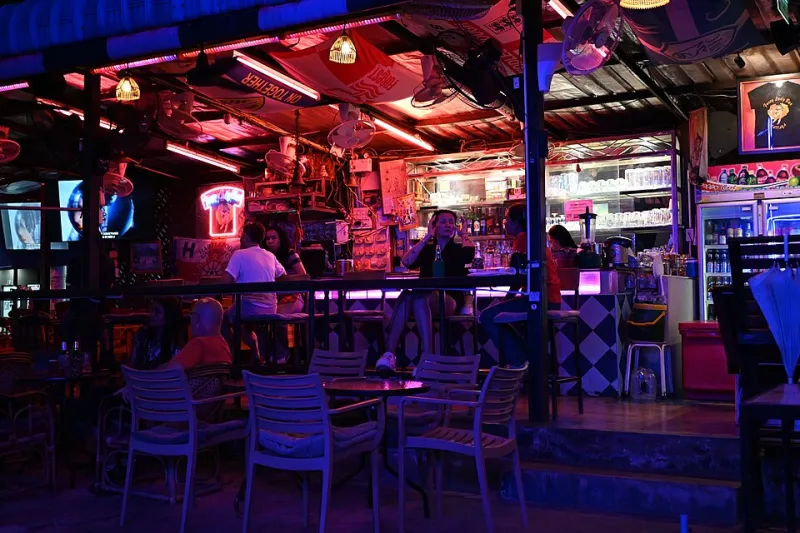
Photo: PattayaPatrol, CC BY-SA 4.0, via Wikimedia Commons
Walk into any bar in America at 2 AM and you'll see the same thing: last call, flickering lights, a bartender eyeing the door. Online clubs don't get that luxury. When you sign up for a community that promises entertainment around the clock, somebody — somewhere — is holding the whole thing up.
And it's not free.
The Lights Are Always On, and So Is the Invoice
Let's start with the boring stuff, because the boring stuff is what actually keeps your midnight meme drop from vanishing into the void. Servers don't sleep. Every message, stream, and upload lives somewhere, and that somewhere charges rent by the month.
A mid-sized community platform can easily burn through a few thousand dollars a month in hosting alone. Add bandwidth spikes when a big watch party or event drops, storage for years of shared content, and redundancy so a single outage doesn't nuke the whole neighborhood — and you're looking at real money before anyone has posted a single thing.
Then there's software. Licenses, security tools, spam filters, payment processing. It stacks up quietly, like a tab nobody's watching.
The Moderators Are the Bouncers — and They're Not Getting Paid (Mostly)
Here's the part most members never think about: moderation is a 24/7 job performed largely by people doing it for free.
Think about the rhythm of an always-on club. Daytime in California is the middle of the night in New York, and someone in Austin is just waking up ready to argue about last night's finale. Drama doesn't keep business hours. Neither do trolls, scammers, or the guy who posts the same spoilers in four channels.
Volunteer moderators absorb all of it. Industry surveys have consistently found that a huge share of community moderators report burnout, and it's not hard to see why. They're handling conflict resolution, mental health check-ins, spam waves, and the occasional full-blown crisis — often at 3 AM their time, often for zero dollars.
The smartest communities have learned to treat this like the serious work it is. That means:
- Rotating shifts, so the same three people aren't carrying every overnight fire drill
- Clear escalation paths, so volunteers aren't making judgment calls on harassment cases alone at 4 AM
- Real support, whether that's stipends, perks, or at minimum genuine recognition
Communities that ignore this? They don't get cheaper. They just collapse more slowly, then all at once.
The Human Hours Nobody Budgets For
Beyond moderation, there's the invisible labor of curation. Someone decides what goes on the front page. Someone schedules the trivia night that 400 people show up to. Someone answers the new member who can't figure out how to join a channel.
In a physical club, this is the front desk, the promoter, the manager. Online, it's often one exhausted admin with a spreadsheet and a dream.
And burnout among admins is the quiet killer of online communities. Not lawsuits, not server costs — people. When the person who's been running the show for two years finally logs off for good, there's rarely a succession plan. The club doesn't close; it just slowly goes quiet, one fewer event at a time.
So How Does an Always-On Club Actually Stay Afloat?
Different platforms solve the money problem in different ways, and honestly, the mix matters less than whether it's sustainable.
Memberships and subscriptions are the most straightforward model. A few bucks a month, multiplied by a loyal base, covers servers and lets platforms pay the people doing the heavy lifting. It also aligns incentives — if the club gets boring, members leave, so there's constant pressure to actually be worth it.
Events and experiences are the second engine. Virtual screenings, tournaments, AMAs with creators — these create moments worth showing up for, and sometimes worth paying for.
Advertising and partnerships round it out, though the communities that lean too hard on this tend to feel like a mall food court pretty quickly.
The platforms that last are the ones honest about the math. A club that never closes needs revenue that never stops, and it needs to reinvest a chunk of that into the humans doing the overnight shift — whether they're paid staff or volunteers who deserve more than a shoutout.
What This Means for You, the Member
None of this is a guilt trip. But there's something to be said for knowing the difference between a community that's built to last and one running on fumes.
A few signs you're in a healthy one: moderation feels consistent, not arbitrary. Events actually happen on schedule. The people in charge talk openly about how things are funded. And when a longtime admin steps back, someone's ready to step up — because there's a bench, not a single point of failure.
The 24/7 promise is easy to make and expensive to keep. Every time you log in at some ungodly hour and the room's still warm, somebody made that happen. The best clubs are the ones that never forget it.